International Day of Friendship!
It's International Day of Friendship and we'll be celebrating by continuing to make sure our clubs are a safe, fun, and welcoming space for all!Keep reading to find out more...

Everything we have written about mentors.
Written by our mentors
0 guides for parents · 2 posts from the clubs
It's International Day of Friendship and we'll be celebrating by continuing to make sure our clubs are a safe, fun, and welcoming space for all!Keep reading to find out more...
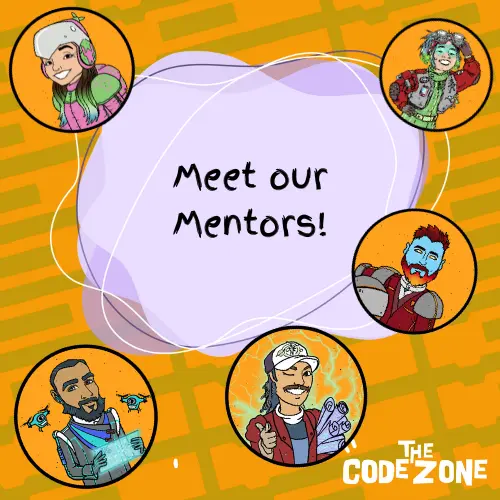
Today we have six of our newest mentors with me: Charlotte, Comfort, Jacob, Jordie, Lewis, and Musa, all ready to answer some questions and tell us all about some of their favourite things!


The people who actually run the sessions. Every mentor is background-checked and STEM-certified, and is trained to adapt to how a child learns rather than expecting the child to adapt to the session.
A mentor works with no more than six children at a time, which is less like teaching a class and more like six short conversations. The useful part is rarely showing a child the answer: it is asking the question that gets them to find it, then leaving them to it.
Mentors write a note on every child after every session, which is how we know when somebody is ready to move up a level, or would rather stay where they are.
More than a third of our members are autistic or have ADHD, based on what parents tell us when they join, so a good deal of mentor training is about making an hour work for them: no pressure to have the camera on, chat instead of speaking, and stepping away without anything being made of it.
You can meet the mentor your child would actually have at a free account, and we do not ask for card details to book it.
The Code Zone teaches children aged 6 to 16 to code by building their own games. Outside the UK that is the Game Dev Academy, which is self-paced: there is no fixed session time, so a child works at whatever hour suits them in any time zone.
A STEM-certified, background-checked mentor answers by text and video message during the week, so nobody is left on their own with it, and children build their own games rather than working through a set course. Creating an account is free and takes no card details, so you can see the platform before deciding anything.
Children start in Scratch, and the mentor sets harder work as soon as they are ready for it. Levels move down as readily as up so the work always fits, and staying where you are is a perfectly good outcome.
Mentors write a note on every child, which is how we know when somebody is ready to move on, and it is why a child who has gone quiet for three weeks does not simply go unnoticed.
More than a third of our members are autistic or have ADHD, based on what parents tell us when they join.
In 2025 we received the Autism Inclusion Award from the National Autistic Society, the UK's leading autism charity, and in 2026 we were ranked second in the UK in Club Hub UK’s Top 100 Children’s Activity Providers, scored by five independent judges on safeguarding, inclusivity and community impact.
Create a free account Pricing Neurodivergent support Meet the mentors